
Small Décor Changes That Make a Big Difference.


This is a collabrotive post
Most homeowners assume real impact requires a full renovation. That's not accurate. A room's perceived value shifts with detail, not square footage. Paint, lighting, texture, and personal objects change how a space reads within seconds of walking in.
Zillow's 2026 Paint Color Analysis backs this up. The report found that the right wall colour can lift a home's offer price by up to $1,723, based purely on buyer perception rather than any structural change to the property, according to a summary of the Zillow findings published by ConsumerAffairs. That's a measurable, financial argument for treating décor as a strategic decision rather than a decorative afterthought.
Start With Walls and Colour Zones
Colour does more technical work than most people assume. Warm tones read as cosy and lived-in. Cooler tones read as clean and modern. The trick isn't picking one colour for the whole house. It's zoning colour by function.
A few adjustments worth testing room by room:
Living rooms: mid-tone warm neutrals, avoid stark white
Bathrooms: soft blue or sage green, both photograph and feel calmer
Hallways: slightly darker than the rooms leading off it, this creates depth
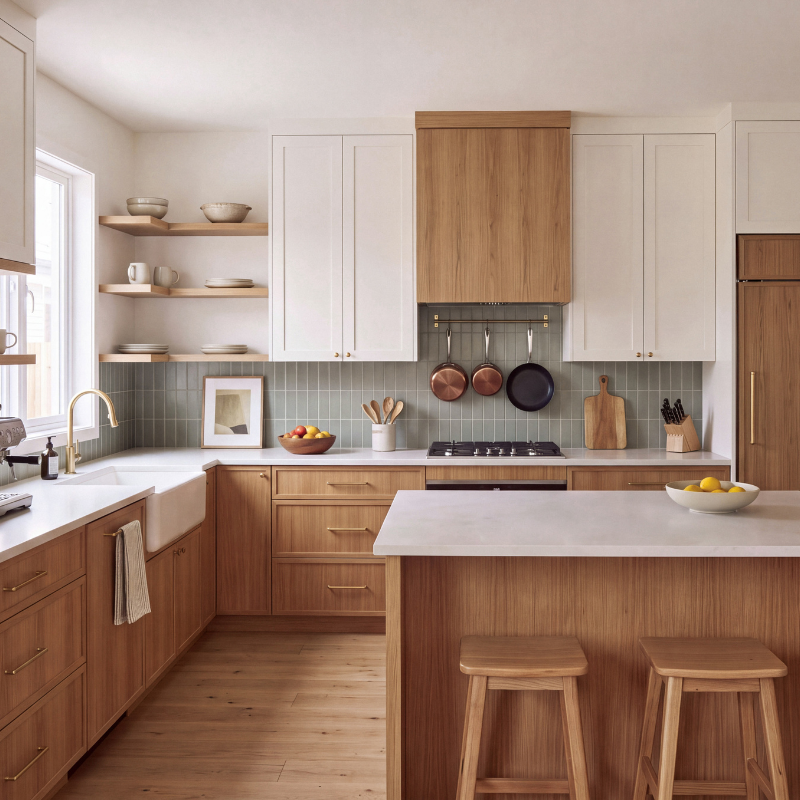
Kitchens: two-tone cabinetry, contrasting upper and lower units
Sheen matters as much as hue. Eggshell hides wall imperfections better than flat matte. Satin holds up better in corridors and high-traffic zones.
Personalise Surfaces With Meaning
Generic decor reads as staged. Personal decor reads as lived-in. This is where most people underinvest. A shelf of curated, unified-format prints does more visual work than a gallery wall of mismatched frames bought in a hurry.
One low-effort, high-return option is personalized photo books. Unlike loose prints, a photo book keeps the visual narrative contained in one object. It sits on a coffee table or shelf without needing wall space, frame hardware, or careful hanging measurements, which makes it one of the simplest additions in a small refresh.
Lighting design separates a flat room from a dimensional one. Most homes rely on a single overhead source, which is a mistake. Layered lighting uses three types: ambient, task, and accent. Ambient sits around 2700K to 3000K for living spaces and should feel soft rather than clinical. Task lighting needs a tighter beam and higher output, think under-cabinet strips in a kitchen or a reading lamp beside a chair. Accent lighting is where personality lives, and it's the layer worth experimenting with first.
Hard surfaces reflect sound and light. Soft surfaces absorb both. A room with bare floors and no curtains will always feel colder and louder than one with a rug and proper drapery, regardless of the paint colour on the walls.
A few practical swaps shift a room quickly:
Add a rug at least 60cm wider than the furniture sitting on it
Swap thin curtains for lined ones, this affects insulation as well as light control
Layer two cushion sizes on a sofa instead of a matching set
Add a throw in a textured weave, boucle or chunky knit work well
Hardware and Fixtures Are Underrated
Cabinet handles, door knobs, and tap fittings get replaced far less often than they should. These are small metal components, but they set the tone for an entire kitchen or bathroom. Brushed brass reads warm. Matte black reads contemporary. Chrome reads clinical and cold.
Swapping hardware is usually a 30 minute job per unit and needs no trade. It costs a fraction of a full kitchen or bathroom refit and changes the room's character almost immediately.
Statement Lighting as a Focal Point
Once ambient and task lighting are sorted, a room often still lacks a focal point. This is where a single statement piece earns its place. It doesn't need to be expensive or structural. It needs to draw the eye to one spot and hold it there.
Custom neon lights fill exactly that gap. Unlike a standard lamp, a neon piece functions as both a light source and a piece of artwork at once. Placed above a headboard, in a home office, or along a bar area, it gives a room an anchor point that photographs well and reads as intentional rather than accidental.
For anyone wanting that kind of feature without a rewire or a large budget, custom neon lights are worth a look. LED-flex versions in particular run cooler and use less power than traditional glass neon, which makes them easier to place in a bedroom or living room without worrying about heat.
Small Additions With a Compounding Effect
None of these changes work as well in isolation as they do together. A repainted wall next to the same tired lighting still looks unfinished. A personalised shelf next to old, dull hardware still looks incomplete. The value comes from treating a room as a connected system, not a checklist of unrelated tasks.
Final Thought
Big renovations get attention. Small, considered changes get results. Colour, light, texture, and personal objects cost less and take less time to change, but they alter how a room functions and how it feels to live in, every single day.





Comments